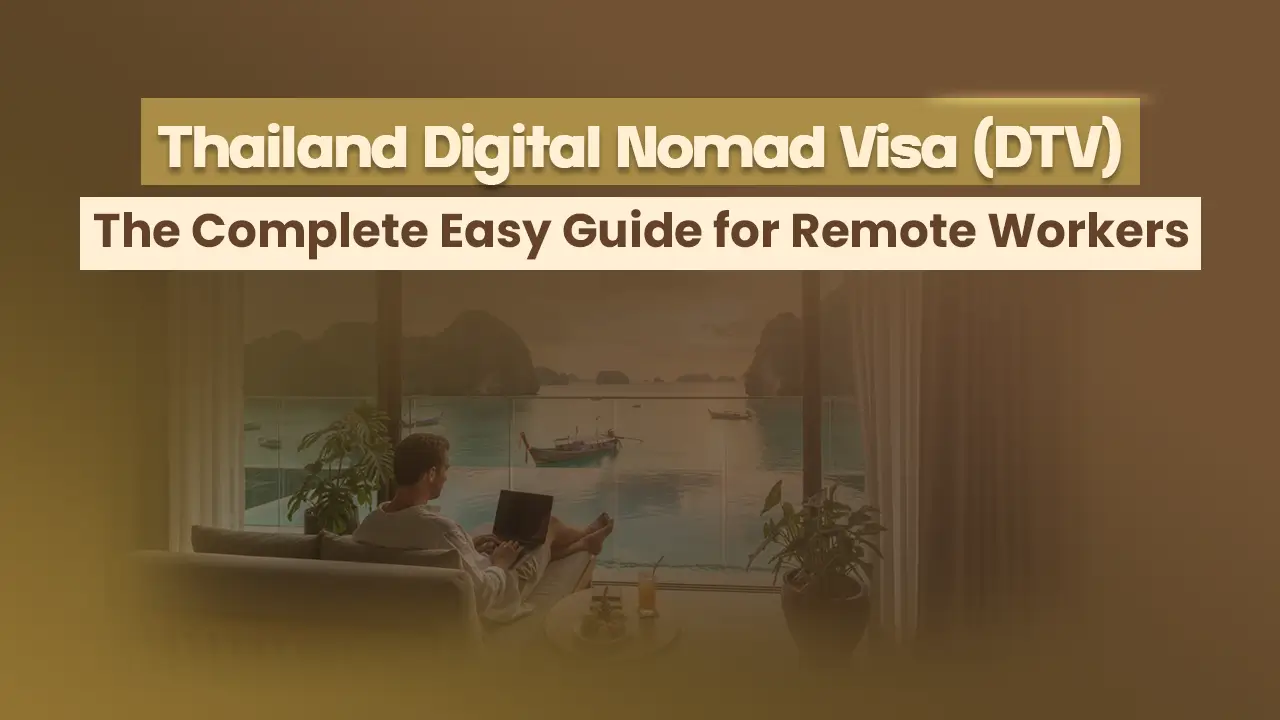
Thailand is one of the most loved countries for digital nomads. People from all over the world choose Thailand because life here feels simple, joyful, and exciting. Now, with the new Thailand Digital Nomad Visa, living and working remotely in Thailand is easier than ever. If you dream of sunny beaches, cozy cafés, fast Wi-Fi, and friendly people, then this visa might be perfect for you.
In this guide, you will learn everything about the Thailand digital nomad visa, also known as the Destination Thailand Visa (DTV). Moreover, we will walk through who can apply, what documents you need, how long you can stay, how to apply, and many helpful tips. Let’s begin your journey to living the digital nomad life in Thailand!
What Is the Thailand Digital Nomad Visa?
The Thailand Digital Nomad Visa lets remote workers, freelancers, and online business owners stay in Thailand for an extended period. You can enter many times, stay longer, and enjoy a more relaxed lifestyle without rushing with visa runs or complicated renewals.
This visa is also called the Destination Thailand Visa (DTV). It gives you flexible entry options, so you can live, work online, explore, and enjoy the country at your own pace. You can also spend time in different cities like Bangkok, Chiang Mai, Phuket, Pattaya, and more.
Furthermore, people love this visa because it creates a stable and easy experience for digital nomads in Thailand.
Quick Facts at a Glance
Here is a simple and fast overview:
- Visa name: Destination Thailand Visa (DTV)
- Perfect for: Digital nomads, freelancers, remote workers, and online entrepreneurs
- Stay length: Up to 180 days each time you enter
- Entry type: Multi-entry for several years
- Family: Spouses and kids may join if they follow the rules
- Purpose: Remote work, freelancing, digital nomad jobs, creative work, or soft-power activities
Therefore, these quick facts already show why many people call it the best digital nomad visa Thailand offers.
Why Thailand Is a Dream for Digital Nomads
Thailand is a paradise for remote workers, and there are so many reasons why.
Let’s look at the biggest ones:
Very affordable living
Food, apartments, coworking spaces, and transport are much cheaper than in most Western countries. You can enjoy a good quality of life with less stress.
Fast internet everywhere
Cafés, condos, coworking hubs, libraries, hotels—almost every place has fast Wi-Fi. You can work comfortably from nearly anywhere.
Beautiful weather
Warm weather, bright sunshine, and blue beaches make you feel good every day. Even in big cities, the tropical vibe feels refreshing.
Friendly people
Thai people are kind, polite, and helpful. Living here feels safe and welcoming.
Delicious food
Fresh fruits, spicy soups, BBQ skewers, bubble tea, and thousands of dishes make life exciting. And the best part? Everything is affordable.
Easy travel
Thailand sits in the center of Southeast Asia. So you can fly to Bali, Malaysia, Singapore, or Vietnam very quickly.
Because of all these benefits, digital nomads in Thailand enjoy a fun, balanced, and comfortable lifestyle.
Which Visa Should You Choose? (Simple Comparison)
Thailand offers different visa types for different kinds of digital workers. Here is an easy comparison to help you choose the right one for your lifestyle.
Destination Thailand Visa (DTV)
Best for most digital nomads.
This is the main Thailand digital nomad visa designed for remote workers and freelancers. You can stay long, enter multiple times, and enjoy flexibility.
Why choose DTV?
- Easy requirements
- Long stays up to 180 days at a time
- Multi-entry visa
- Perfect for people with online income
- Suitable for freelancers and remote workers
- Family can join
- Very comfortable for people who travel often
Most people who work online choose this visa because it gives them freedom.
Long-Term Resident (LTR) Visa
This visa is for high-income professionals, wealthy retirees, or those working in large companies. It offers tax benefits and stays of up to ten years.
Choose this if:
- You earn a very high income
- Also, you work for a large, approved company
- You want long-term stability
- Moreover, you want special tax rules
This visa has stricter rules and higher income requirements.
SMART Visa and Other Options
SMART Visa is for people in technology, startups, science, engineering, and innovation fields. It helps professionals working in special industries.
Choose this if you are:
- A startup founder
- Or, a tech expert
- A researcher or specialist
This is not the best choice for regular digital nomads.
Simple Summary Table
| Visa Type | Best For | Stay Length | Difficulty | Flexibility |
| DTV (Digital Nomad) | Remote workers, freelancers | Up to 180 days per entry | Easy | Very flexible |
| LTR | High earners, executives | Years | Hard | High |
| SMART | Tech, research, startups | Varies | Medium | Medium |
So now you know—if you work online and want a relaxed lifestyle, the Thailand digital nomad visa (DTV) is usually the best choice.
Who Can Apply for the Thailand Digital Nomad Visa? (Eligibility Guide)
The DTV is designed to be simple and easy. You do not need a high salary or a giant company. But there are still some basic rules you must follow.
You can apply if:
- You work remotely for a company outside Thailand
- Also, you are a freelancer providing services online
- You own an online business
- Moreover, you perform soft-power activities such as art, culture, sports, or entertainment
- You can show income or financial stability
- Furthermore, you have a valid passport
- You follow Thai laws and immigration rules
What if you have a spouse or kids?
They can also join you by applying under dependent rules. This helps families stay together while enjoying life in Thailand.
Who cannot apply?
- People working for Thai companies without permission
- Or, people without valid identification
- People who cannot show basic financial proof
If you meet the simple digital nomad requirements, then you can easily start your application.
Documents You Need (Checklist)
To apply for the digital nomad visa in Thailand, prepare the following items:
- Valid passport
- Passport-sized photos
- Proof of a remote job or freelancing
- Contract or employment letter
- Income or bank statements
- Proof of a clean background
- Completed application form
- Travel insurance (if required)
- Accommodation confirmation
- Family documents if bringing dependents
Simple Tip:
Keep both digital copies and printed copies. Having both helps you avoid problems.
Fees, Taxes, and Work Permit Rules (Explained Simply)
Visa Fees
Visa fees may vary depending on where you apply. You pay at the embassy, consulate, or through the online visa portal.
Taxes for Digital Nomads in Thailand
This part is important. If your income comes from outside Thailand, you may have special tax situations. But tax rules can change, so it is smart to talk to a tax expert.
Do You Need a Work Permit?
This is the question many digital nomads ask.
- If you work online for a foreign company, you usually do not need a traditional Thai work permit.
- Or, if you work for a Thai employer or earn Thai income, then different rules apply.
Moreover, Thailand is also updating digital systems to process work permits faster in the future.
So the best thing to do is stay informed and follow all legal rules.
Cost of Living in Thailand (Simple Breakdown)
One of the biggest reasons digital nomads love Thailand is the affordable cost of living. Let’s see some example monthly budgets.
Bangkok
- Apartments: medium price
- Transport: cheap
- Food: very cheap
- Ideal for: city lovers, nightlife, shopping
Chiang Mai
- Apartments: cheap
- Food: very cheap
- Outdoor activities: amazing
- Ideal for: peaceful work life, nature lovers
Phuket / Koh Samui / Krabi
- Apartments: medium to high, depending on area
- Beaches: beautiful
- Ideal for: beach lovers, wellness travelers, luxury seekers
Even with a small budget, you can enjoy a comfortable lifestyle, delicious meals, and fun activities every week.
How to Apply (Step-by-Step Guide)
Applying for the Thailand digital nomad visa is simple when you follow a clear plan. Here is an easy step-by-step guide.
Step 1: Gather All Documents
Make sure you have your passport, proof of remote work, photos, and income statements ready.
Step 2: Fill Out the Application
Complete the official application form carefully. Double-check your details, so nothing is missing.
Step 3: Submit the Application
You can submit your application through an embassy, consulate, or online platform, depending on your country.
Step 4: Attend Appointment (If Required)
Some locations may ask for a short interview or document check. It is usually simple and friendly.
Step 5: Wait for Approval
Processing time varies, but it is usually not too long. Keep your phone and email active for updates.
Step 6: Receive Your Visa
Once approved, you will get your visa. Now you can pack your bags and get ready for your digital nomad adventure.
Step 7: Enter Thailand
Upon arrival, immigration will give you a stamp. This stamp shows how long you can stay.
Step 8: Enjoy Your Stay
Now you can work online, explore, travel, relax, and enjoy life in Thailand.
Avoid These Common Mistakes
Many digital nomads make simple mistakes that slow down their visa process.
Here is how to avoid them:
- Always check your passport validity
- Submit clear and correct documents
- Keep proof of income ready
- Avoid overstaying
- Check your entry stamp every time
- Follow work permit rules
- Keep health insurance updated
- Moreover, stay informed about Thailand immigration changes
Furthermore, with these simple habits, your experience will stay smooth and stress-free.
Helpful Tips for Digital Nomads in Thailand
Here are extra tips to make your experience even more enjoyable:
- Use coworking spaces for focus
- Choose cafés with quiet seating
- Get a local SIM card for stable internet
- Try different cities until you find your favorite
- Keep your digital documents safe
- Join nomad communities to make friends
- Learn basic Thai words—they help a lot
- Stay hydrated in tropical weather
- Use ride-sharing apps for easy travel
Furthermore, with these tips, your digital nomad lifestyle will feel even smoother.
Important Note
Thailand’s immigration rules can change from time to time. New updates may arrive, or older rules may get replaced. Because of this, it is always smart to stay informed and double-check the latest requirements before you apply or travel.
To keep yourself safe, confident, and fully compliant, here are a few simple reminders:
- Check official updates regularly: Immigration policies, visa rules, and entry requirements may shift without long notice.
- Review your visa duration and entry stamp: Also, always look at the date on your passport stamp so you do not stay longer than allowed.
- Prepare extra documents: Even if the rules seem simple, having backup papers helps you avoid delays.
- Follow work rules carefully: Remote work is usually fine, but earning local income may require different permissions.
- Keep copies of everything: Digital and printed copies of your visa, passport, and documents save you time in emergencies.
- Consult a professional when unsure: Moreover, visa experts can guide you through updates, special cases, or new processes.
- Avoid relying only on old information: Blogs, forums, or social media posts may become outdated very quickly.
Final Thought: Ready to Start Your Digital Nomad Life?
Thailand is one of the best places in the world for digital nomads. For example, it gives you beautiful views, friendly people, delicious food, strong internet, and a relaxed lifestyle. With the Thailand Digital Nomad Visa, you can work comfortably, explore freely, and enjoy a balanced life every single day.
If you feel ready to begin, the next step is simple: start your visa process and plan your new life in Thailand. Your dream lifestyle is waiting for you.
FAQs About the Thailand Digital Nomad Visa
Q: What is the Thailand Digital Nomad Visa?
Ans: The Thailand Digital Nomad Visa is a special visa designed for people who work online. It allows remote workers, freelancers, and online business owners to stay in Thailand for a longer period. This means you can live in Thailand, enjoy the culture, explore the cities, and still work for companies outside the country.
And because it was created with digital nomads in mind, the process feels simple and flexible, making your stay smooth and stress-free.
Q: How long can I stay with this visa?
Ans: With this visa, you can stay in Thailand for up to 180 days every time you enter the country. Also, this gives you plenty of time to work, relax, and travel around.
Even better, it is a multi-entry visa, so you can leave Thailand whenever you want and then come back again without any trouble. Because of this, you get full freedom to travel while keeping Thailand as your home base.
Q: Can I work for a foreign company while living in Thailand?
Ans: Yes, absolutely! This visa is made especially for remote workers who earn money from companies or clients outside Thailand. So you can freely work online, attend meetings, finish projects, and run your business without worrying about breaking rules.
However, it is important to remember that the visa is not for jobs that involve Thai employers or local companies. As long as your income comes from abroad, you are usually safe and fully compliant.
Q: Can my family come with me?
Ans: Yes! Your spouse and children can join you in Thailand, which makes this visa perfect for digital nomad families. Moreover, they can apply under the dependent rules and enjoy the same beautiful lifestyle as you.
And because Thailand is very family-friendly—with parks, beaches, malls, and fun activities everywhere—your whole family can enjoy living, learning, and exploring together.
Q: Do I need a Thai work permit for remote work?
Ans: Usually, no. If you only work for a foreign company or serve clients outside Thailand, you do not need a traditional Thai work permit. This is one of the biggest reasons digital nomads love this visa.
However, rules can change from time to time. So it is always a good idea to stay updated, follow official guidelines, and check for new immigration or work regulations. Furthermore, this helps you stay safe, legal, and worry-free during your entire stay.